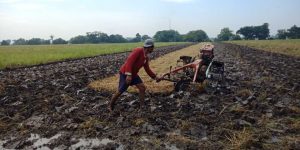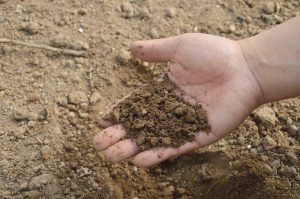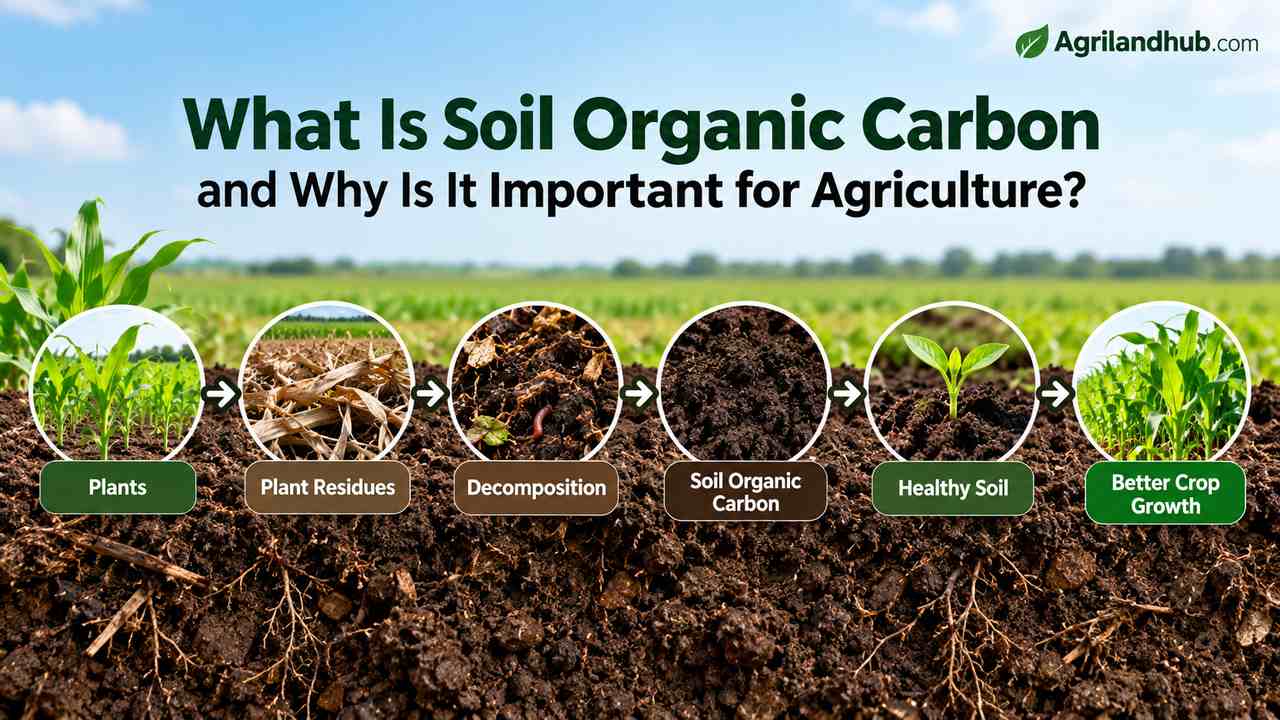
Soil Organic Carbon (SOC) is one of the most important components of healthy agricultural soil. It plays a major role in soil fertility, soil structure, water retention, nutrient cycling, microbial activity, and long-term agricultural productivity.
Although carbon is often discussed in relation to climate change and atmospheric carbon dioxide, a significant amount of carbon is also stored in soils in the form of organic carbon.
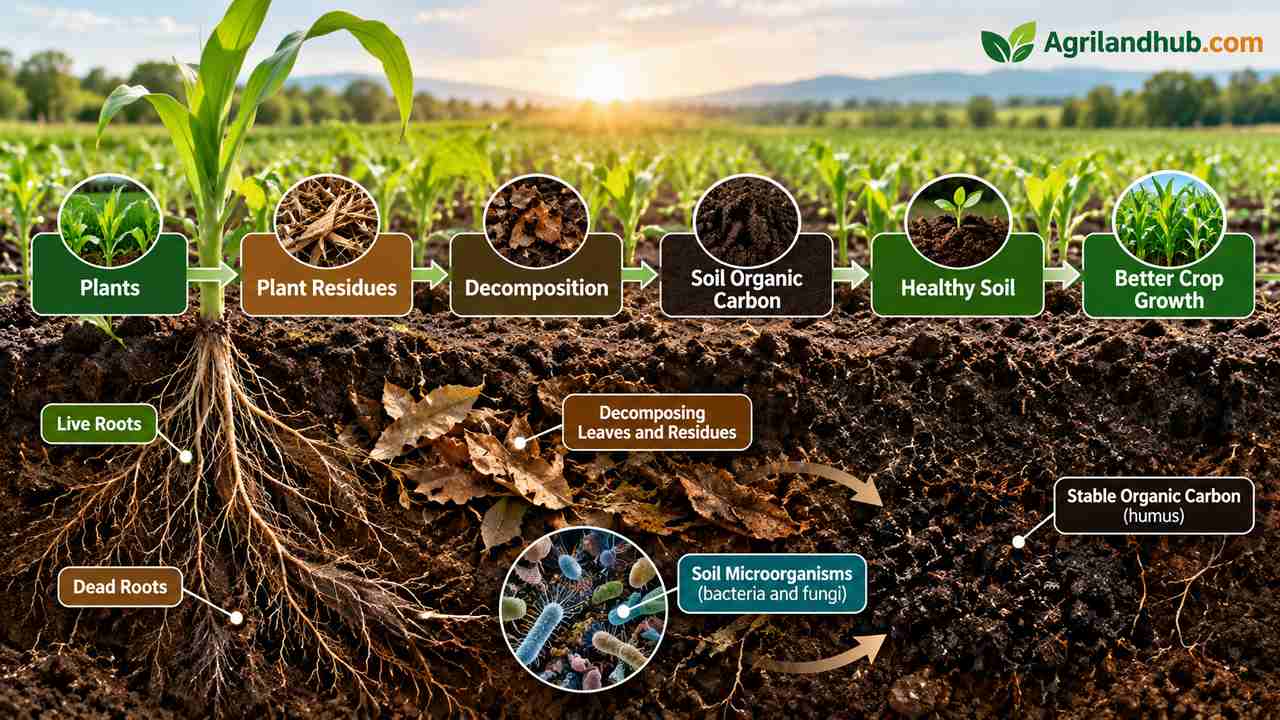
Soil Organic Carbon comes mainly from plant residues, roots, microorganisms, animal manure, compost, and other organic materials that enter the soil. Through decomposition and stabilization processes, some of this carbon becomes part of the soil organic matter system.
For farmers, understanding SOC is important because soil is not simply a medium in which crops grow. It is a living system containing minerals, organic matter, water, air, microorganisms, roots, and countless biological interactions.
When soil organic carbon is properly managed, it can contribute to better soil structure, improved water-holding capacity, more active soil biology, and more efficient nutrient cycling. These functions can ultimately support healthier crops and more resilient agricultural systems.
However, increasing Soil Organic Carbon is not as simple as adding organic materials to the soil. Carbon enters, transforms, stabilizes, and leaves the soil through several interconnected processes.
Therefore, effective SOC management requires an understanding of how soil, plants, microorganisms, climate, and agricultural practices interact.
What Is Soil Organic Carbon?
Soil Organic Carbon refers to the carbon contained within organic materials in the soil. These materials originate from living organisms or materials that were once part of living organisms.
The major sources include plant roots, leaves, stems, crop residues, root exudates, microorganisms, animal manure, compost, and decomposed organic matter.
When organic materials enter the soil, microorganisms begin breaking them down. Some of the carbon is rapidly decomposed and released back into the atmosphere as carbon dioxide. Other carbon compounds can remain in the soil for longer periods and become part of relatively stable soil organic matter.
Therefore, Soil Organic Carbon is dynamic. It is constantly being added, transformed, decomposed, stabilized, and lost.
Agricultural soils with high carbon inputs may be able to maintain or increase SOC, while soils with low organic inputs and high rates of decomposition or erosion may gradually lose carbon.
AgrilandHub’s soil science reference also defines Soil Organic Carbon as carbon present in soil organic matter and identifies its relationship with soil health and carbon sequestration.
Soil Organic Carbon vs. Soil Organic Matter
Soil Organic Carbon and Soil Organic Matter are closely related but are not exactly the same thing.
Soil Organic Matter (SOM) includes the broad range of organic materials present in soil, while Soil Organic Carbon (SOC) represents the carbon contained within those organic materials.
In simple terms:
Soil Organic Matter = the broader organic material system
Soil Organic Carbon = the carbon component of that organic material
Organic matter contains carbon as well as other elements such as hydrogen, oxygen, nitrogen, phosphorus, and sulfur.
This distinction is important when interpreting soil test results. A soil test may report organic carbon, organic matter, or both, depending on the analytical method used.
Organic matter is important because it contributes to many soil functions. It can help improve aggregation, support microorganisms, influence nutrient cycling, and increase the soil’s ability to retain water.
Where Does Soil Organic Carbon Come From?
Soil Organic Carbon comes from several sources. The amount and quality of carbon entering the soil depend heavily on vegetation, agricultural management, climate, and soil conditions.
1. Crop Residues
Leaves, stems, roots, straw, husks, and other crop residues are important sources of carbon.
When crop residues are left in the field, microorganisms gradually decompose them. Some carbon is released as carbon dioxide, while another fraction becomes incorporated into the soil organic matter pool.
Removing or burning large amounts of crop residues can reduce the amount of carbon returned to the soil.
2. Plant Roots
Roots are an important source of carbon because they contribute organic material both during their growth and after they die.
Living roots also release organic compounds into the surrounding soil. These compounds can provide energy for microorganisms living around the root system.
This area surrounding the root is known as the rhizosphere and is one of the most biologically active zones in many agricultural soils.
3. Microorganisms
Bacteria, fungi, and other microorganisms play an important role in transforming organic carbon.
Microorganisms consume organic materials as sources of energy and nutrients. During this process, part of the carbon is respired as carbon dioxide.
When microorganisms die, some of their residues can become incorporated into soil organic matter and may contribute to more persistent forms of soil carbon.
4. Animal Manure
Animal manure can provide both carbon and nutrients. When appropriately managed, manure can contribute to the organic matter pool.
However, manure quality varies considerably. Fresh manure, composted manure, and other processed organic materials can behave differently in soil.
Application rates should therefore be based on soil conditions, crop requirements, material quality, and nutrient management considerations.
5. Compost
Compost is another source of organic carbon.
Because compost has already undergone decomposition, some of its carbon compounds are relatively more stable than those found in fresh plant material.
Compost can therefore contribute to soil organic matter while also supporting other soil functions.
6. Cover Crops
Cover crops can increase carbon inputs by producing additional biomass above and below the soil surface.
Their roots contribute organic compounds and dead root material, while leaves and stems can eventually become soil residues.
Cover crops may also provide additional benefits such as erosion control, weed suppression, and improved soil surface protection.
Why Is Soil Organic Carbon Important for Agriculture?
Soil Organic Carbon is important because it influences physical, chemical, and biological soil properties.
Its benefits do not occur through one single mechanism. Instead, SOC interacts with many parts of the soil ecosystem.
1. Soil Organic Carbon Improves Soil Structure
One of the important functions of organic carbon is its contribution to soil aggregation.
Soil particles can bind together into aggregates. Stable aggregates create a more favorable arrangement of pores within the soil.
These pores provide space for water and air while also allowing roots to move through the soil.
Good soil structure can improve infiltration, aeration, root development, and resistance to erosion.
Organic matter is one of the components involved in maintaining soil aggregation, although the exact mechanisms vary depending on soil type, minerals, biological activity, and management.
For readers interested in this subject, AgrilandHub’s article on soil structure and how to improve it provides additional information.
2. It Helps Soil Retain Water
Organic carbon can contribute to the soil’s ability to store and retain water.
This is particularly important in agricultural areas that experience irregular rainfall or periods of drought.
Organic matter can influence soil pore distribution and water retention. However, the effect depends on soil texture, structure, mineralogy, organic matter characteristics, and other factors.
Sandy soils and clay soils, for example, respond differently to increases in organic matter.
The goal is not simply to make soil hold as much water as possible. A productive soil needs a balance between water storage, drainage, and aeration.
3. It Supports Soil Microorganisms
Soil microorganisms need carbon-based compounds as sources of energy.
Bacteria, fungi, and other microorganisms break down organic materials and participate in nutrient cycling.
Microbial activity can influence the decomposition of residues and the release of nutrients into forms that plants can potentially use.
A soil with an active biological community can support a wide range of processes associated with nutrient cycling and organic matter transformation.
However, high microbial activity does not automatically mean that soil is healthy. Biological activity must be considered together with physical and chemical properties.
4. It Supports Nutrient Cycling
Organic carbon is closely associated with nutrient cycling.
When plant residues and other organic materials decompose, nutrients contained within those materials can be released.
Nitrogen, phosphorus, sulfur, and other elements may become part of the soil nutrient cycle.
The speed of decomposition depends on several factors, including temperature, moisture, oxygen availability, microbial activity, and the chemical composition of the organic material.
Materials with different carbon-to-nitrogen ratios can decompose at different rates.
Therefore, managing organic carbon also requires attention to nutrient balance.
5. It Can Increase Nutrient Retention
Organic matter contains negatively charged sites that can hold positively charged nutrient ions.
This characteristic is related to Cation Exchange Capacity (CEC).
Calcium, magnesium, potassium, and other cations can be retained on exchange sites associated with clay minerals and organic matter.
AgrilandHub’s detailed discussion of Cation Exchange Capacity and its role in agriculture explains how organic matter contributes to CEC and nutrient retention.
Soils with greater nutrient-retention capacity can be less vulnerable to nutrient losses through leaching, although nutrient movement also depends strongly on rainfall, irrigation, soil texture, drainage, and fertilizer management.
6. It Helps Reduce Soil Erosion
Soil organic carbon can contribute indirectly to erosion control by supporting better soil aggregation and surface stability.
Plant residues and living vegetation provide additional protection by reducing the direct impact of raindrops on the soil surface.
This is important because erosion can remove the upper layer of soil where organic matter, nutrients, and biological activity are often concentrated.
Once topsoil is lost, rebuilding the same soil condition can take many years.
7. It Supports Root Development
Healthy roots require sufficient oxygen, water, nutrients, and physical space.
Improved soil aggregation and pore structure can create better conditions for root growth.
When roots can penetrate more easily, they can explore a greater volume of soil and potentially access more water and nutrients.
Roots themselves then contribute additional carbon through root turnover and organic compounds released into the rhizosphere.
This creates an important feedback relationship:
Healthy plants → greater root activity → more carbon inputs → improved soil biological processes → better soil conditions → healthier plants.
8. It Can Improve Soil Resilience
Agricultural soils are frequently exposed to disturbances such as cultivation, heavy rainfall, drought, compaction, erosion, and repeated harvesting.
A soil with adequate organic matter and good structure may be better able to withstand some of these pressures.
SOC is not the only factor responsible for resilience, but it is one of the components supporting soil biological and physical functions.
Soil Organic Carbon and the Carbon Cycle
Soil Organic Carbon is an important component of the global carbon cycle.
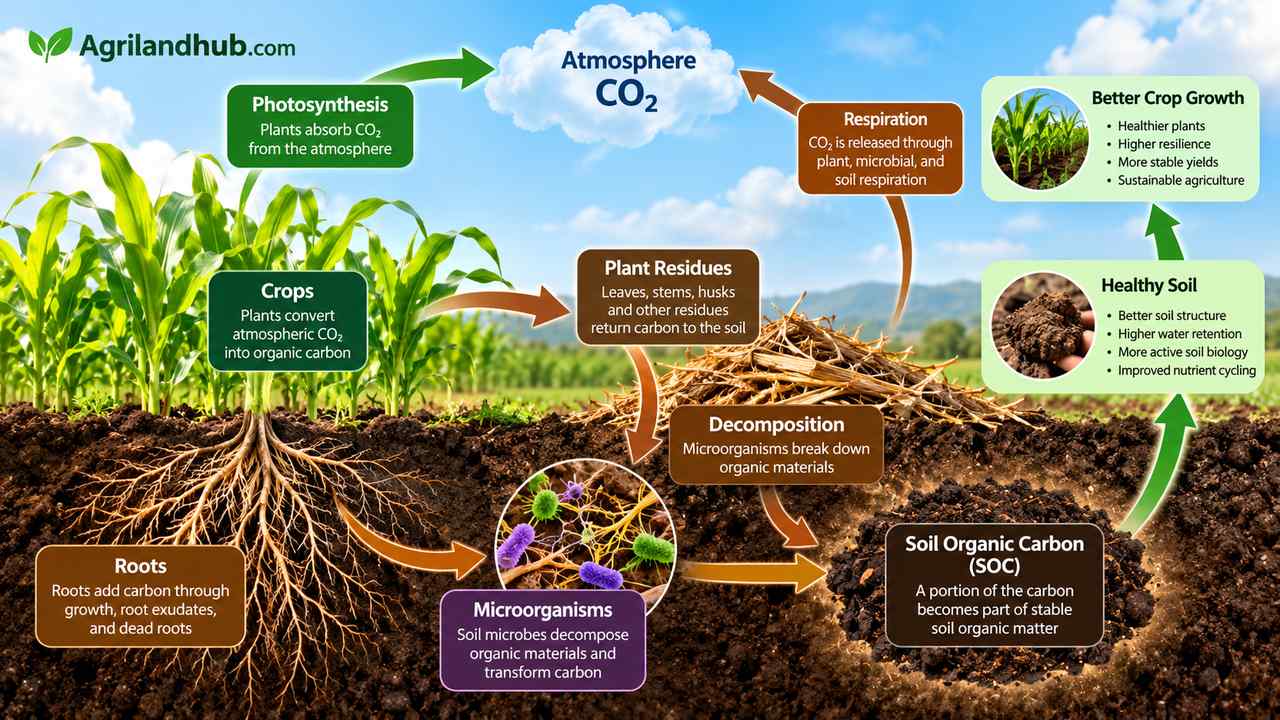
Plants absorb atmospheric carbon dioxide during photosynthesis and convert carbon into organic compounds.
Some of this carbon becomes part of leaves, stems, roots, fruits, and other plant tissues.
When plants die or release organic compounds through their roots, carbon enters the soil.
Microorganisms then decompose these materials.
A portion of the carbon is released back into the atmosphere as carbon dioxide. Another portion remains in soil organic matter and may become stabilized through interactions with minerals or physical protection within soil aggregates.
Therefore, soil carbon storage is a dynamic process.
Atmospheric CO₂ → Plants → Roots and Residues → Soil Organic Matter → Soil Organic Carbon → Decomposition/Stabilization
The balance between carbon entering the soil and carbon leaving the soil determines whether soil carbon stocks increase, remain relatively stable, or decline.
Factors That Affect Soil Organic Carbon
SOC levels vary widely between soils. Several factors determine how much carbon enters the soil and how long it remains there.
1. Soil Texture
The proportions of sand, silt, and clay influence carbon stabilization.
Clay-rich soils can protect certain organic compounds through interactions with minerals and fine particles.
Sandy soils generally have different carbon stabilization mechanisms and may have lower capacity to physically protect organic matter.
AgrilandHub’s guide to soil texture, its components, influence, and classification provides additional background.
2. Climate
Temperature and moisture strongly influence decomposition.
Warm and moist conditions can support high microbial activity and rapid decomposition when other factors are not limiting.
Cold or dry conditions may slow decomposition.
Climate therefore affects both carbon inputs and carbon losses.
3. Vegetation
Different crops produce different amounts and types of biomass.
Crops with extensive root systems may contribute more below-ground carbon than crops with smaller root systems.
Perennial vegetation can also provide continuous root inputs compared with annual cropping systems.
4. Soil Disturbance
Frequent and intensive soil disturbance can change aggregate structure and expose organic material to decomposition.
Reduced soil disturbance, where appropriate for the production system, may help protect soil structure and organic matter.
However, reduced tillage should not be treated as a universal solution. It needs to be adapted to local soil, climate, crop, weed, pest, and machinery conditions.
5. Crop Residue Management
Returning residues to the soil increases carbon inputs.
Burning residues, removing them from the field, or allowing severe erosion can reduce the amount of carbon returned to the soil.
6. Erosion
Erosion can physically remove carbon-rich topsoil.
This means that erosion control is not only important for conserving soil nutrients but also for maintaining soil carbon stocks.
7. Organic Inputs
Compost, manure, plant residues, and other organic amendments can increase carbon inputs.
However, the quantity and stability of the carbon added are more important than simply measuring the total amount of organic material applied.
How Can Farmers Increase Soil Organic Carbon?
Increasing SOC usually requires long-term management rather than a single application or treatment.
1. Return Crop Residues to the Soil
Crop residues should be retained or recycled whenever practical.
Straw, leaves, stalks, and other residues can become sources of organic carbon.
The method of residue management should consider potential pest, disease, and nutrient-management problems.
2. Use Compost
Well-managed compost can provide relatively stable organic carbon.
Compost should be mature and suitable for agricultural use.
The application rate should be based on soil conditions and nutrient requirements rather than simply applying the maximum possible amount.
3. Apply Organic Amendments Responsibly
Manure and other organic amendments can increase organic carbon inputs.
However, excessive application may create nutrient imbalances, odor problems, salinity issues, or nutrient losses.
Organic amendments should therefore be part of a complete nutrient-management plan.
4. Plant Cover Crops
Cover crops can increase carbon inputs while protecting the soil surface.
Legumes, grasses, and mixtures can be selected according to climate, cropping system, and management objectives.
The benefits will depend on biomass production, root development, termination method, and the length of time the soil remains covered.
5. Use Organic Mulch
Organic mulch can protect the soil surface from rainfall and excessive heating.
As the material decomposes, it can contribute carbon to the soil.
Mulching may be particularly useful in horticultural systems, orchards, gardens, and some plantation systems.
6. Reduce Unnecessary Soil Disturbance
Soil should not be disturbed more intensively than necessary.
Conservation-oriented tillage systems may help maintain soil aggregates and reduce the exposure of organic matter to decomposition.
7. Use Crop Rotation
Crop rotation increases the diversity of crops and root systems within a production system.
Different crops contribute different types and quantities of residues and root-derived carbon.
Rotation can also support broader soil-health objectives.
8. Control Erosion
Erosion control should be considered an important part of carbon management.
Contour farming, terraces, vegetation strips, cover crops, mulches, and other conservation practices can help reduce soil loss depending on the site.
9. Integrate Crops and Livestock Where Appropriate
Integrated crop-livestock systems can provide opportunities to recycle organic materials.
Animal manure can be processed and returned to agricultural land, increasing carbon and nutrient inputs.
10. Avoid Unnecessary Burning of Organic Residues
Burning crop residues rapidly converts much of their carbon into gases and ash.
Where agronomically and environmentally appropriate, returning residues to the soil can retain more of that organic material within the agricultural system.
How Is Soil Organic Carbon Measured?
Soil Organic Carbon cannot be accurately determined simply by looking at soil color.
Although dark soil can often indicate higher organic matter, visual observation is not a substitute for laboratory analysis.
Soil samples should be collected using a consistent and representative sampling method.
Sampling depth is especially important.
For example, if a farmer compares SOC measurements from different years but samples different depths, the results may not be directly comparable.
Laboratory methods can determine the concentration of organic carbon in soil.
However, measuring carbon concentration is different from calculating soil carbon stock.
Carbon stock considers not only the carbon concentration but also soil bulk density and the depth being evaluated.
A simplified concept is:
Soil Carbon Stock = Carbon Concentration × Soil Mass × Sampling Depth
The actual calculation requires appropriate units and corrections.
Long-term monitoring is particularly valuable because one measurement only provides a snapshot.
Repeated measurements using consistent sampling procedures can reveal whether management practices are maintaining or changing soil carbon stocks.
Soil Organic Carbon and Soil Profile
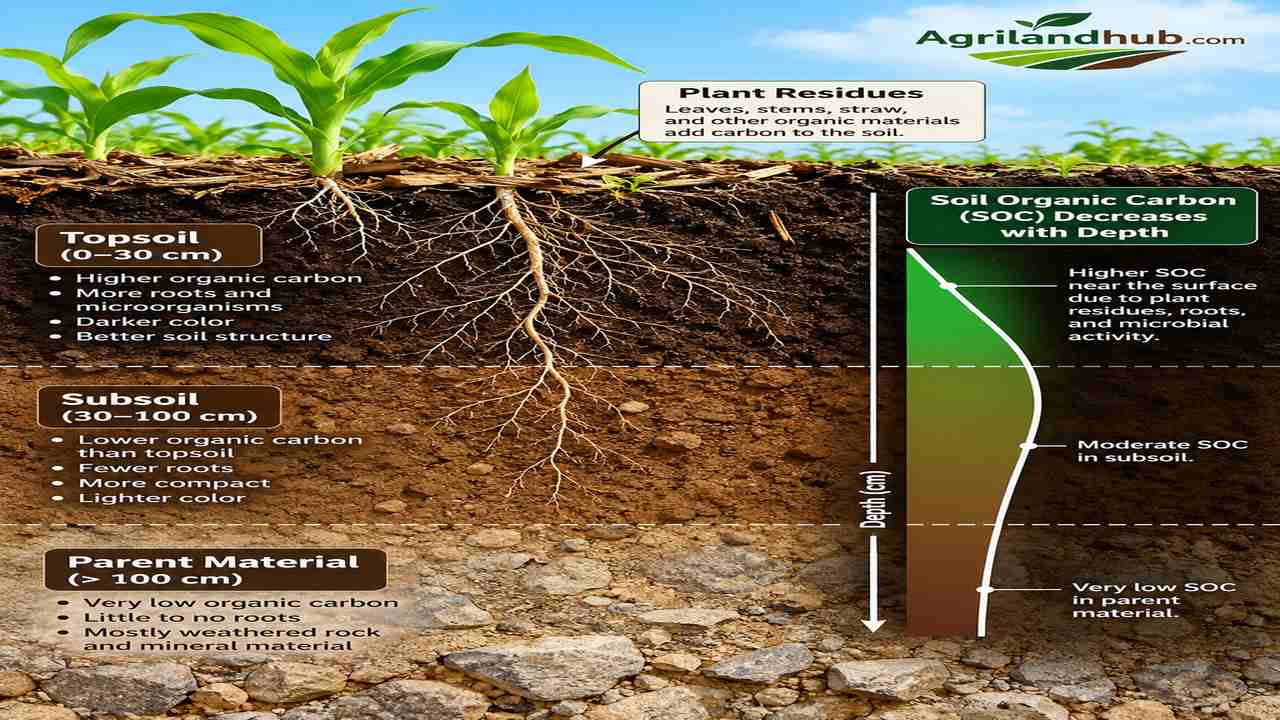
SOC is not distributed equally throughout the soil profile.
Surface soil generally receives greater inputs from crop residues, leaves, roots, and biological activity.
Deeper soil layers may contain less organic carbon, although substantial amounts of carbon can also occur below the surface.
The distribution depends on soil formation, vegetation, root depth, climate, soil texture, mineralogy, drainage, and land management.
Understanding soil layers is therefore important when studying soil carbon.
A soil profile is a vertical representation of soil horizons from the surface downward, and these horizons can have different physical, chemical, and biological characteristics.
Readers who want to understand this concept further can read What Is Soil Profile? Components, Formation Process, Methods and Benefits.
Is Soil Organic Carbon the Same as Carbon Sequestration?
No. The two concepts are related but not identical.
Soil Organic Carbon refers to the carbon present in soil organic matter.
Soil Carbon Sequestration refers to the process of capturing and storing carbon in the soil for a period of time.
A soil can contain a certain amount of SOC without necessarily increasing its carbon stock.
For sequestration to occur, there must generally be a measurable increase in soil carbon stocks relative to an appropriate baseline and accounting period.
This distinction is important because adding organic material does not automatically mean that all of its carbon remains stored in the soil.
Some carbon will be decomposed and released as carbon dioxide.
Some may become stabilized.
Some may be transported away through erosion.
Therefore, carbon sequestration should be evaluated using appropriate measurements rather than assumed solely from the use of organic amendments.
Does More Soil Organic Carbon Always Mean Higher Crop Yield?
Higher SOC can create conditions that support crop productivity, but SOC alone does not determine crop yield.
Crop productivity depends on many factors:
- Water availability
- Nutrient supply
- Soil pH
- Soil texture
- Soil structure
- Temperature
- Crop variety
- Pest and disease pressure
- Weed competition
- Irrigation
- Fertilizer management
- Weather conditions
For example, a soil may have relatively high organic carbon but still produce poorly if it has severe nutrient deficiencies, waterlogging, salinity, extreme acidity, or other limitations.
Therefore, SOC should be considered as one component of an integrated soil-management system.
Soil Organic Carbon and Sustainable Agriculture
Sustainable agriculture requires maintaining the productive capacity of soil over the long term.
SOC contributes to this objective because it is connected with soil structure, biological activity, nutrient cycling, and water dynamics.
Maintaining organic carbon can therefore be an important part of soil conservation.
However, sustainable soil management should not focus on SOC alone.
Farmers should also consider erosion control, nutrient balance, water management, soil pH, compaction, crop diversity, and biological health.
AgrilandHub’s broader agricultural soil-management resources can be explored through Guide to Optimizing Agricultural Soil for Higher Crop Production.
Practical Soil Organic Carbon Management for Farmers
Farmers can begin with relatively simple steps.
- First, evaluate the current condition of the soil through soil testing.
- Second, identify the amount of crop residue that can safely be returned to the field.
- Third, consider cover crops where they fit the production system.
- Fourth, use compost or manure according to crop and soil requirements.
- Fifth, minimize unnecessary soil disturbance.
- Sixth, reduce erosion through appropriate conservation practices.
- Seventh, use crop rotation to increase diversity in the farming system.
- Finally, monitor soil properties over time.
The most useful principle is:
Increase carbon inputs while reducing unnecessary carbon losses.
This does not mean that farmers need to eliminate every soil disturbance or apply organic matter continuously.
Instead, the objective is to create a balanced system in which plants, soil organisms, residues, water, nutrients, and soil minerals interact in a way that supports long-term soil function.
Soil Organic Carbon as an Indicator of Soil Health
SOC can be useful as one indicator of soil health.
Healthy agricultural soil needs functioning physical, chemical, and biological processes.
SOC interacts with many of these processes.
For example, organic carbon contributes to organic matter, which can influence aggregation. Aggregation affects pore structure, which influences water movement and aeration. Water and oxygen availability affect microbial activity and root growth.
This illustrates why soil carbon should not be considered an isolated measurement.
A good soil-health assessment should consider multiple indicators rather than relying on SOC alone.
AgrilandHub’s soil science resources also place Soil Organic Carbon alongside other important concepts such as soil microorganisms, soil structure, soil moisture, nutrient cycling, soil erosion, and soil fertility.
Conclusion
Soil Organic Carbon is one of the key components of a functioning agricultural soil system. It originates mainly from plant residues, roots, microorganisms, manure, compost, and other organic materials. Through decomposition and stabilization, part of this carbon becomes incorporated into soil organic matter.
SOC is important because it interacts with soil structure, water retention, microbial activity, nutrient cycling, erosion resistance, and root development. These functions can contribute to healthier soils and more resilient agricultural production.
Increasing SOC requires long-term management rather than a single intervention. Returning crop residues, using compost and organic amendments responsibly, planting cover crops, applying mulch, reducing unnecessary soil disturbance, controlling erosion, and using crop rotations are among the practices that can contribute to better carbon management.
However, more Soil Organic Carbon does not automatically guarantee higher crop yields. Soil productivity depends on many interacting factors, including nutrients, water, pH, texture, structure, climate, crop genetics, and management.
The most effective approach is therefore to treat Soil Organic Carbon as one component of integrated soil management.
By maintaining and gradually improving soil organic carbon, farmers can help protect one of their most valuable agricultural resources: the soil itself.
Sources and References
- Food and Agriculture Organization of the United Nations. (2017). Soil Organic Carbon: The Hidden Potential. Rome: FAO.
- Food and Agriculture Organization of the United Nations. (2017). Soil Organic Carbon: Mapping, Monitoring and Management. Rome: FAO.
- Intergovernmental Panel on Climate Change. (2019). 2019 Refinement to the 2006 IPCC Guidelines for National Greenhouse Gas Inventories: Volume 4 Agriculture, Forestry and Other Land Use. Geneva: IPCC.
- United States Department of Agriculture, Natural Resources Conservation Service. (2021). Soil Health Assessment. Washington, DC: USDA.
- United States Department of Agriculture, Natural Resources Conservation Service. (2023). Soil Organic Matter and Soil Health. Washington, DC: USDA.
- European Commission. (2023). Soil Organic Carbon and Soil Health. Brussels: European Commission.
- Lal, R. (2004). Soil carbon sequestration impacts on global climate change and food security. Science, 304(5677), 1623–1627.
- Lal, R. (2006). Enhancing crop yields in the developing countries through restoration of the soil organic carbon pool in agricultural lands. Land Degradation & Development, 17(2), 197–209.
- Six, J., Conant, R. T., Paul, E. A., & Paustian, K. (2002). Stabilization mechanisms of soil organic matter: Implications for C-saturation of soils. Plant and Soil, 241, 155–176.
- Schmidt, M. W. I., Torn, M. S., Abiven, S., Dittmar, T., Guggenberger, G., Janssens, I. A., Kleber, M., Kögel-Knabner, I., Lehmann, J., Manning, D. A. C., Nannipieri, P., Rasse, D. P., Weiner, S., & Trumbore, S. E. (2011). Persistence of soil organic matter as an ecosystem property. Nature, 478, 49–56.
- Lehmann, J., & Kleber, M. (2015). The contentious nature of soil organic matter. Nature, 528, 60–68.
- Stockmann, U., Adams, M. A., Crawford, J. W., Field, D. J., Henakaarchchi, N., Jenkins, M., Minasny, B., McBratney, A. B., de Courcelles, V. d. R., Singh, K., Wheeler, I., Abbott, L., Angers, D. A., Baldock, J., Bird, M. I., Brookes, P. C., Chenu, C., Jastrow, J. D., Lal, R., & Zimmermann, M. (2013). The knowns, known unknowns and unknowns of sequestration of soil organic carbon. Agriculture, Ecosystems & Environment, 164, 80–99.