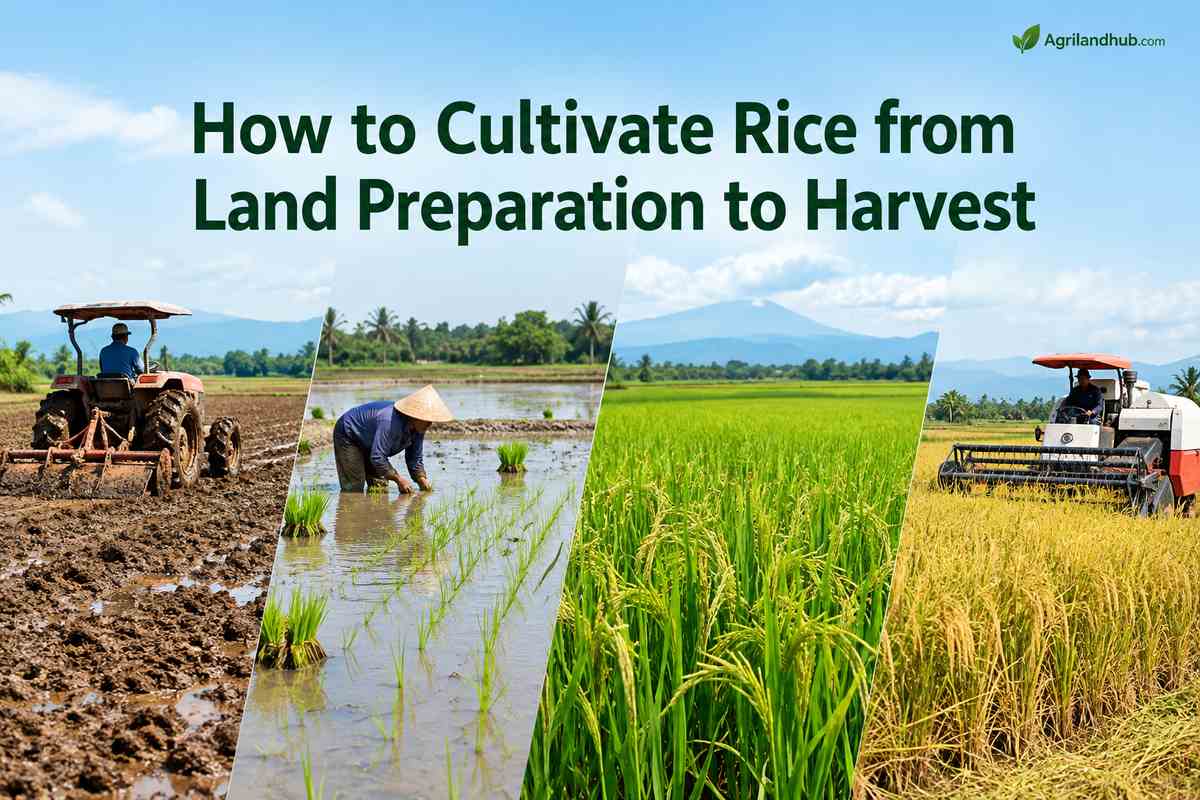
Rice is one of the world’s most important staple crops, providing food for billions of people and supporting the livelihoods of millions of farmers.
Successful rice cultivation requires careful planning, proper land preparation, high-quality seeds, balanced fertilization, effective water management, and timely harvesting.
Although rice is commonly grown in flooded fields, it can also be cultivated under rainfed and upland conditions, depending on the variety, climate, soil characteristics, and available water resources.
Understanding each stage of rice production, from preparing the land to harvesting mature grains, helps farmers improve crop growth, increase yields, reduce production costs, and maintain soil fertility for future planting seasons.
How to Cultivate Rice for Beginners
1. Understanding the Basic Requirements for Rice Cultivation
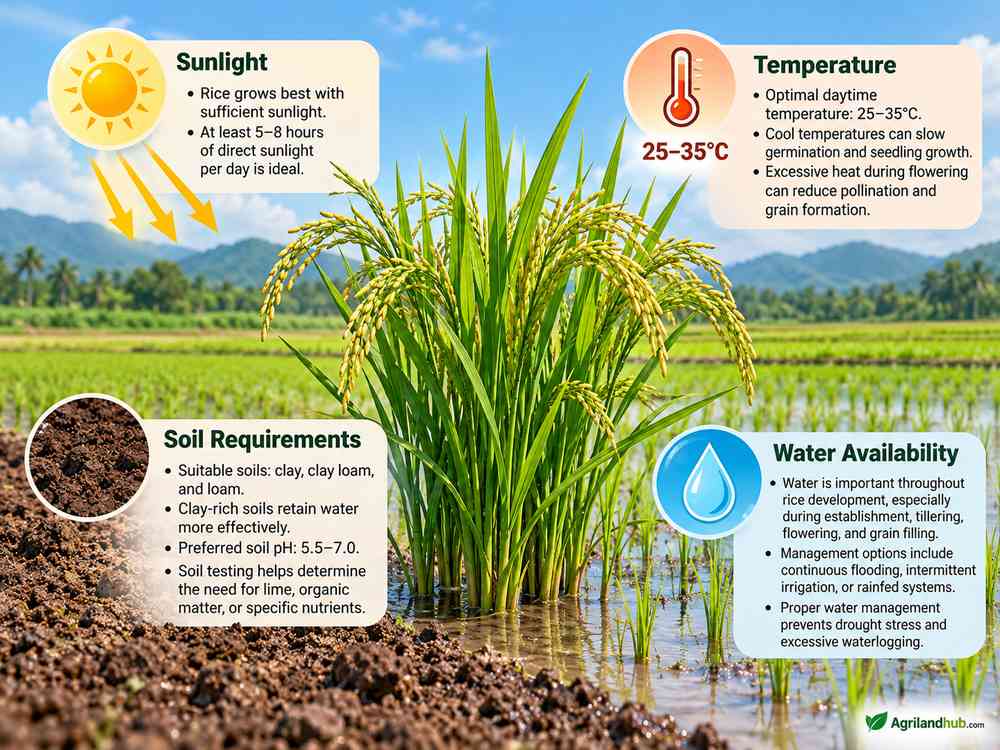
Before planting rice, farmers should understand the environmental conditions required for healthy crop development. Rice is adaptable to different growing environments, but appropriate temperature, sunlight, soil fertility, and water availability are essential for achieving good yields.
Climate and Temperature
Rice generally grows best in warm climates with sufficient sunlight. Many varieties perform well when daytime temperatures remain approximately 25–35°C, although optimal conditions vary according to the variety and growth stage.
Cool temperatures can slow germination and seedling development, while excessive heat during flowering can reduce pollination and grain formation. Farmers should therefore select varieties suited to their local climate and planting season.
Soil Requirements
Rice can grow in several soil types, including clay, clay loam, and loam soils. Clay-rich soils are often suitable for flooded rice cultivation because they retain water more effectively than sandy soils.
The preferred soil pH is commonly around 5.5–7.0, although rice can tolerate a broader range depending on soil conditions and variety. Soil testing helps determine whether lime, organic matter, or specific nutrients are needed before planting.
Water Availability
Water is important throughout rice development, particularly during establishment, tillering, flowering, and grain filling. However, rice does not always need to remain continuously submerged.
Farmers may use continuous flooding, intermittent irrigation, rainfed management, or other systems appropriate to their field conditions. Reliable water management helps prevent drought stress, excessive waterlogging in unsuitable systems, and unnecessary irrigation costs.
2. Preparing the Land for Rice Planting
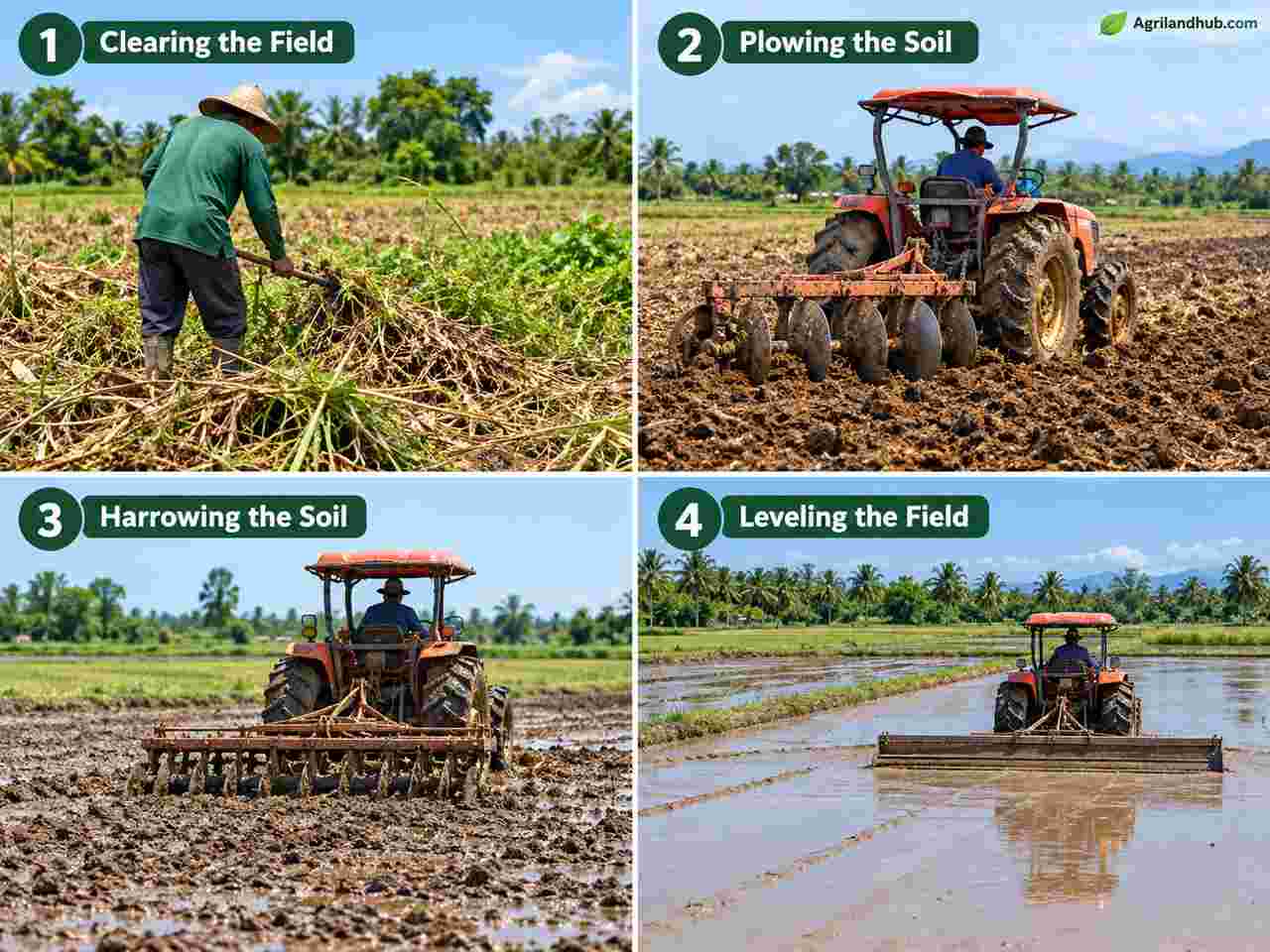
Land preparation is a critical stage because it creates favorable conditions for root development, water management, weed suppression, and uniform crop establishment.
Clearing the Field
Begin by removing unwanted vegetation, excessive crop residues, and other materials that could interfere with planting.
Existing plant residues may be incorporated into the soil when appropriate, but heavily diseased residues should be managed carefully to reduce the risk of carrying pests and pathogens into the next crop.
Repair field boundaries and irrigation channels before preparing the soil. In irrigated lowland fields, strong bunds help maintain the required water level and reduce water loss.
Plowing the Soil
Plowing breaks up compacted soil, incorporates suitable organic materials, and prepares the field for further tillage.
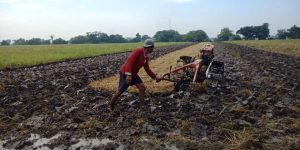
Farmers may use a tractor, power tiller, animal-drawn implement, or manual tools, depending on the field size and available equipment. The depth and intensity of tillage should match soil conditions rather than follow a fixed depth for every field.
Excessive tillage can increase costs, damage soil structure, and contribute to erosion in vulnerable areas.
Harrowing and Leveling
After plowing, harrowing breaks down large soil clods and produces a more uniform surface.
For flooded lowland rice, leveling is particularly important because uneven ground creates differences in water depth. High spots may become too dry, while low spots may experience excessive submergence.
Good leveling improves water distribution, weed management, and fertilizer efficiency.
Puddling for Lowland Rice
Puddling involves working wet soil to create a soft, relatively impermeable layer that can reduce downward water movement in suitable paddy soils.
It is commonly practiced before transplanting lowland rice. However, puddling is not necessary for every rice production system. Upland rice and some direct-seeded systems may require different soil preparation practices.
3. Selecting High-Quality Rice Seeds
Seed quality has a direct influence on germination, seedling vigor, crop uniformity, and final productivity. Farmers should select varieties suited to local environmental conditions, market demand, and production objectives.

Choose the Right Rice Variety
Rice varieties differ in maturity period, grain quality, plant height, resistance to pests and diseases, and tolerance to environmental stress.
Consider the following factors when selecting a variety:
- Growing duration: Choose an appropriate maturity period for the local planting calendar.
- Yield potential: Select varieties with reliable performance under local conditions.
- Pest and disease resistance: Prefer varieties resistant to important local rice pests and diseases.
- Grain quality: Match grain characteristics to consumer and market preferences.
- Environmental adaptation: Consider tolerance to drought, flooding, salinity, or other relevant stresses.
Certified seeds from reliable suppliers can help ensure varietal identity, purity, and acceptable germination quality.
Testing Seed Germination
A simple germination test can help farmers estimate seed viability before planting.
Place a representative sample of seeds between moist paper towels or in another suitable germination medium. Keep the sample moist and observe the seeds under appropriate conditions for the selected variety.
Count the seeds that produce normal seedlings and calculate the germination percentage:

For example, if 90 out of 100 seeds produce normal seedlings, the germination rate is 90%.
Seeds with poor germination may require a higher seeding rate or replacement with better-quality seed, following local recommendations.
4. Treating Seeds and Preparing Them for Planting
Seed preparation depends on the production method, seed condition, variety, and local recommendations. Proper preparation can promote uniform emergence and reduce establishment problems.
Seed Cleaning
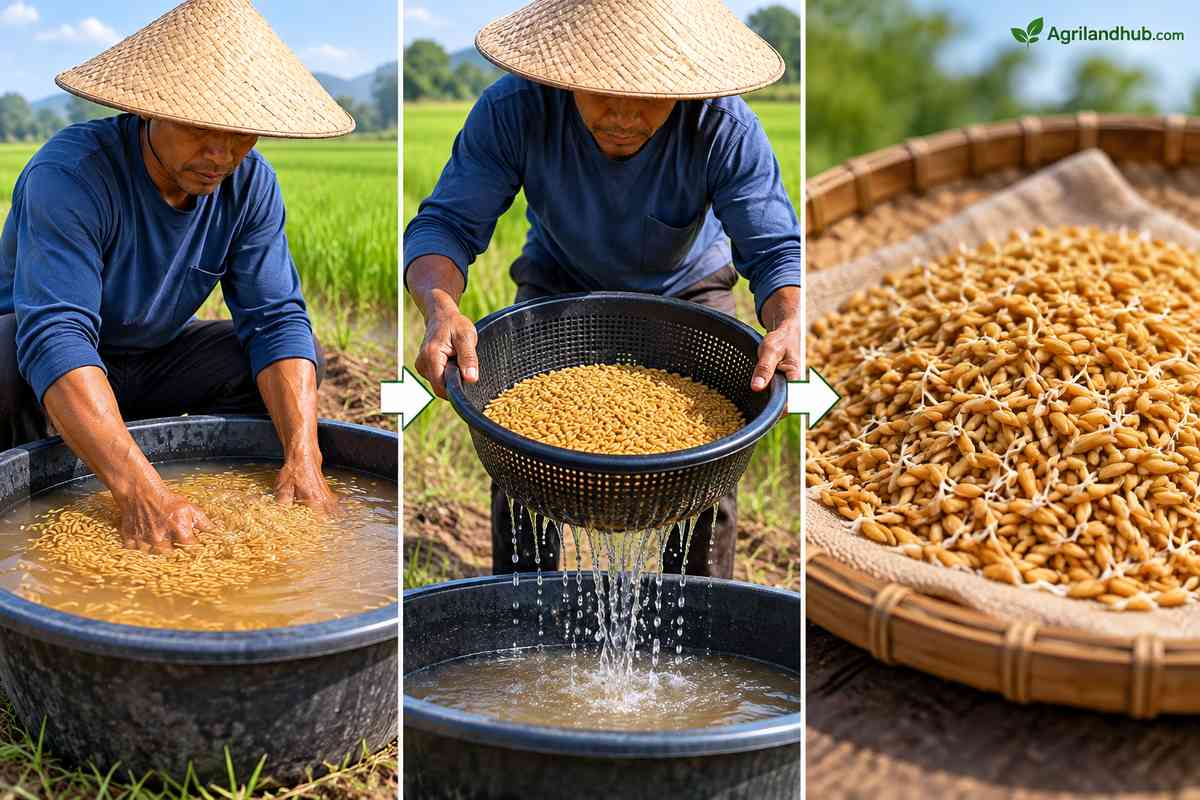
Remove empty grains, broken seeds, weed seeds, and other unwanted materials. Use clean seeds from a trusted source to reduce the risk of introducing weeds or seed-borne diseases.
Seed Soaking and Pre-Germination
For many wet direct-seeding systems, farmers soak rice seeds in clean water for a period recommended for the variety and local conditions. The seeds may then be drained and kept moist until the first small roots emerge.
The soaking duration and subsequent incubation conditions should be adjusted to avoid seed deterioration or excessive root growth.
Pre-germinated seeds can establish more quickly under suitable field conditions, but the soil must be prepared properly to prevent seeds from being buried too deeply or displaced by water.
For dry direct seeding, seeds may instead be sown directly into prepared soil without soaking.
Seed Treatment
Where necessary, use approved seed treatments according to product labels and local regulations. Treatments should target identified risks rather than be applied indiscriminately.
5. Establishing the Rice Crop
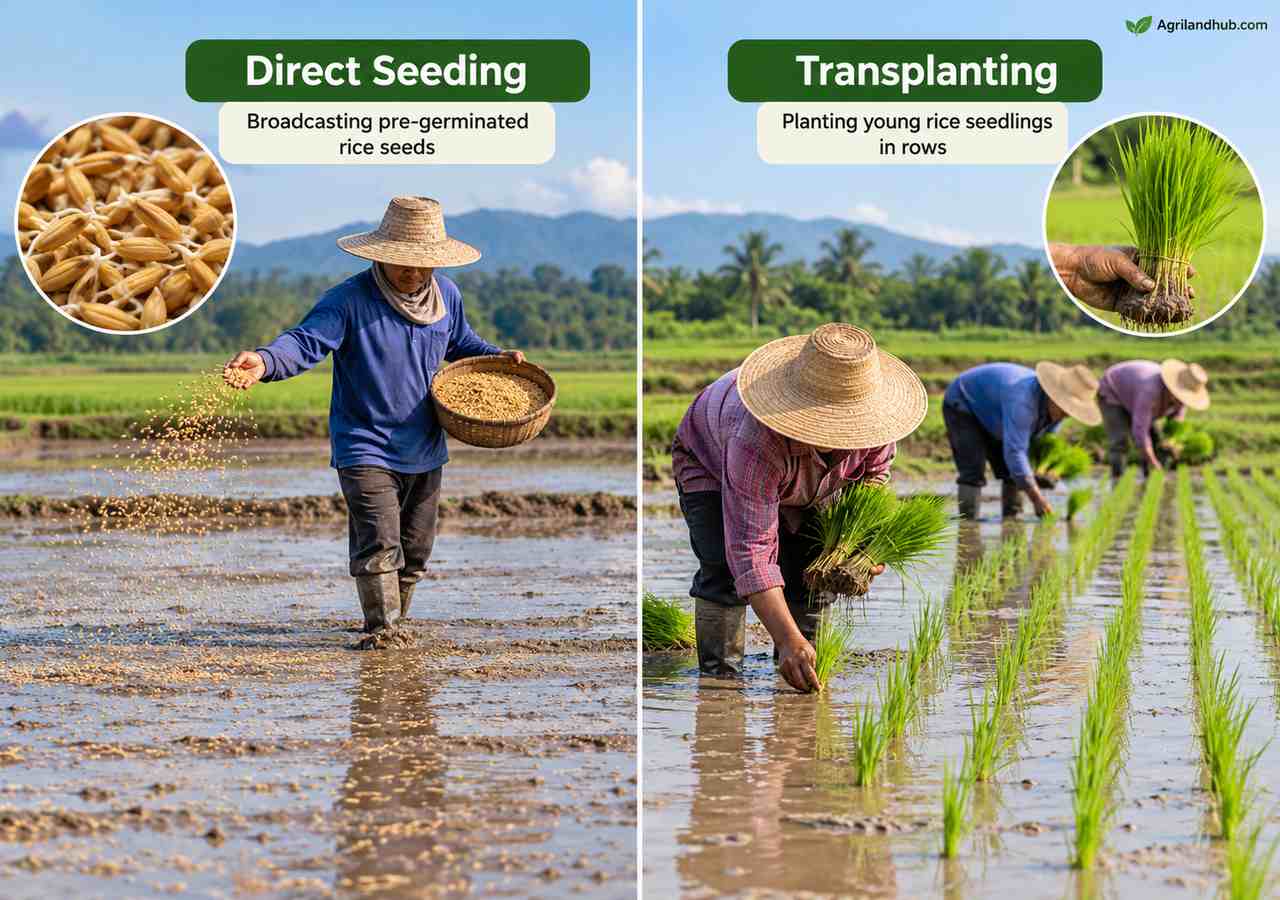
Rice can be established through direct seeding or transplanting. The best method depends on labor availability, irrigation, field conditions, weed pressure, and local farming practices.
Direct Seeding
Direct seeding involves placing rice seeds directly into the field.
There are two common approaches:
- Wet direct seeding: Pre-germinated seeds are distributed onto a prepared, wet field. The soil surface should be suitable for seed attachment and early root development.
- Dry direct seeding: Dry seeds are drilled or broadcast into prepared soil. This approach may reduce labor and water requirements during establishment but can require more intensive early weed management.
Seed rates, row spacing, and sowing depth should follow local recommendations for the variety and method.
Transplanting Rice Seedlings
Transplanting involves growing seedlings in a nursery before moving them to the main field.
The process typically includes:
- Preparing a nursery bed or seedling tray.
- Sowing quality seeds.
- Maintaining suitable moisture and seedling nutrition.
- Protecting seedlings from pests, diseases, and excessive weather stress.
- Transplanting healthy seedlings when they reach the recommended stage.
In many traditional systems, seedlings are transplanted at approximately 15–30 days after sowing, although the ideal age varies with the variety, nursery conditions, and production system.
Transplant seedlings carefully to minimize root damage. Avoid burying them excessively deep, and follow locally recommended spacing and seedling numbers per planting point.
Maintaining Proper Plant Spacing
Appropriate spacing reduces unnecessary competition between plants and allows better access to sunlight, nutrients, and air.
Common spacing patterns in transplanted rice include approximately 20 × 20 cm or 25 × 25 cm, but the best arrangement depends on variety, soil fertility, season, and local recommendations.
Wider spacing may be appropriate for vigorous varieties, while other systems require different plant densities.
6. Managing Water Throughout Rice Growth
Water management is one of the most important factors influencing rice productivity. The goal is to maintain sufficient moisture for healthy crop development while avoiding unnecessary water use and harmful field conditions.
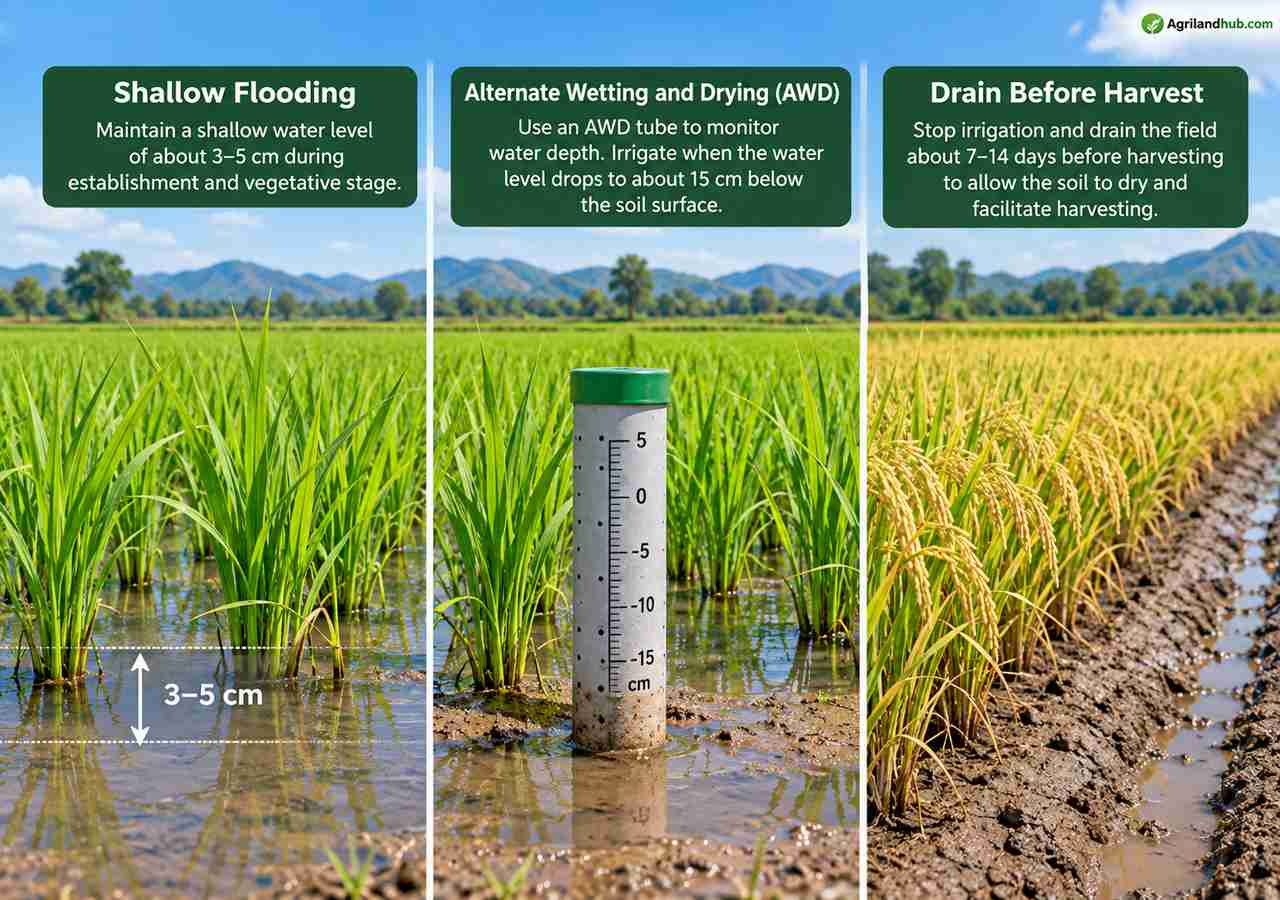
Early Establishment
Immediately after sowing or transplanting, maintain conditions appropriate to the establishment method.
Direct-seeded rice generally requires adequate moisture without conditions that wash seeds away, bury them too deeply, or cause oxygen deprivation during early germination. Transplanted rice needs sufficient moisture to support recovery and root establishment.
A shallow water layer may be appropriate in established lowland fields, but water depth should be adjusted to crop stage and field conditions.
Tillering Stage
During tillering, rice plants produce additional shoots that may develop into productive stems. Avoid severe water stress during this period because it can reduce tiller formation.
Maintain adequate soil moisture and use irrigation according to rainfall, soil type, and the production system.
Flowering and Grain Filling
Water stress around flowering can cause poor grain setting and reduce yield. Adequate water availability is therefore particularly important during reproductive development.
Continue monitoring soil moisture during grain filling, when developing grains accumulate starch and increase in weight.
Water-Saving Irrigation
Alternate wetting and drying (AWD) is a water-management technique used in suitable irrigated rice systems. Fields are allowed to drain and the soil is permitted to become less saturated before irrigation is applied again.
AWD should be implemented using appropriate field monitoring and locally recommended thresholds. Severe drying should be avoided, especially around flowering, and water availability must be sufficient to prevent damaging stress.
Drainage Before Harvest
As the crop approaches maturity, irrigation is commonly reduced and fields are drained when appropriate. The timing depends on soil type, rainfall, crop maturity, and harvesting equipment.
Good drainage can improve field access and help the crop mature under suitable conditions.
7. Fertilizing Rice Plants for Healthy Growth
Rice requires nitrogen, phosphorus, potassium, and several secondary and micronutrients for healthy development. Nutrient requirements vary according to soil fertility, variety, expected yield, crop establishment method, and previous cropping history.
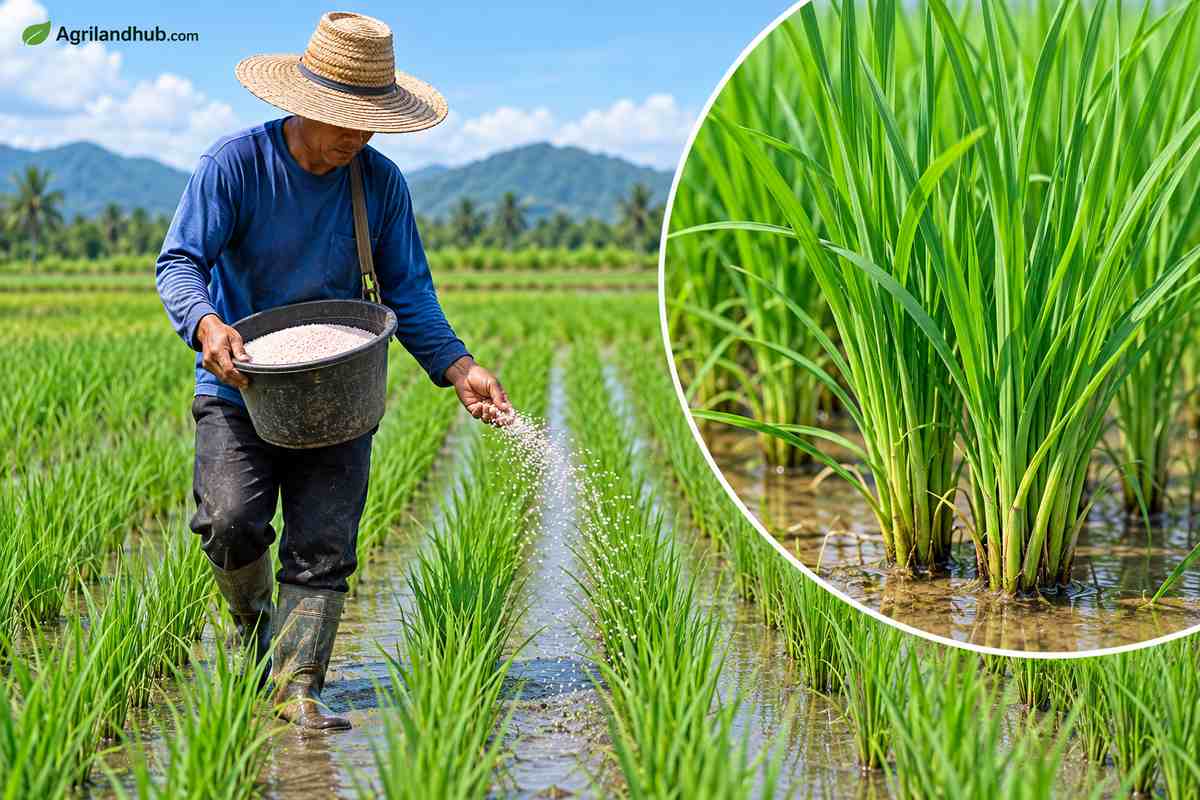
Nitrogen
Nitrogen supports leaf development, chlorophyll formation, and tillering. Insufficient nitrogen can cause pale leaves and poor plant growth, while excessive nitrogen may produce overly lush vegetation, increase lodging risk, and worsen certain pest or disease problems.
Split nitrogen applications are often used to match nutrient availability with crop demand.
Phosphorus
Phosphorus supports early root development, energy transfer, and plant establishment. Its availability depends partly on soil chemistry, particularly in flooded soils.
Potassium
Potassium contributes to water regulation, enzyme activity, stem strength, and stress tolerance. Adequate potassium can help support grain filling and reduce certain crop weaknesses.
Applying Fertilizer Correctly
A practical fertilization program should include the following steps:
- Test the soil when possible.
- Determine nutrient requirements using local recommendations.
- Apply basal fertilizer at the recommended time.
- Split nitrogen applications according to crop stage and nutrient management guidance.
- Apply additional nutrients only when needed.
- Avoid applying fertilizer immediately before heavy rainfall or under conditions that increase nutrient losses.
Organic materials, such as well-decomposed compost or suitable crop residues, may help improve soil organic matter and nutrient cycling. Their nutrient contributions should be considered when determining fertilizer requirements.
8. Controlling Weeds in Rice Fields
Weeds compete with rice plants for light, water, nutrients, and growing space. If not controlled early, they can reduce crop establishment and final grain yield.
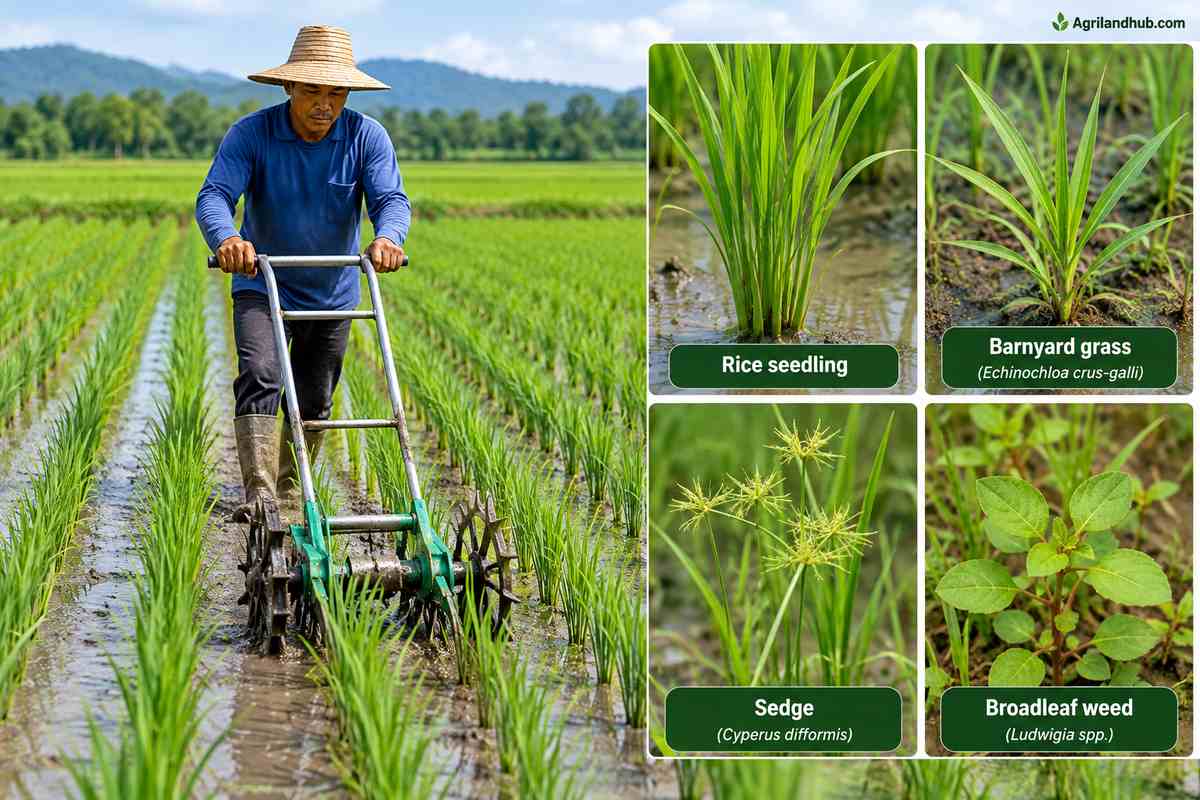
Identify Common Weeds
Rice fields may contain grassy weeds, sedges, and broadleaf weeds. The dominant species vary according to the region, soil, water regime, and cultivation method.
Correct identification helps farmers choose the most appropriate management strategy.
Use Cultural Weed Control
Cultural practices can reduce weed pressure without relying exclusively on herbicides.
Useful methods include:
- Preparing the field properly before planting.
- Using clean seeds.
- Establishing rice plants uniformly.
- Maintaining suitable water levels where appropriate.
- Removing weeds before they produce seeds.
- Rotating crops when feasible.
- Cleaning equipment to prevent weed seed movement between fields.
Direct-seeded rice may require particularly careful early weed management because rice and weeds can emerge at similar times.
Mechanical and Chemical Control
Hand weeding, mechanical weeders, and approved herbicides may be used depending on field conditions.
Herbicides should be selected according to the target weeds, rice growth stage, and production system. Follow label directions, protective equipment requirements, application rates, and local regulations.
Avoid repeated use of the same herbicide mode of action when it increases the risk of herbicide resistance.
9. Managing Rice Pests and Diseases
Pests and diseases can reduce rice yield and grain quality if they are not detected and managed promptly. Integrated pest management (IPM) combines monitoring, prevention, cultural practices, biological control, and careful use of pesticides when necessary.
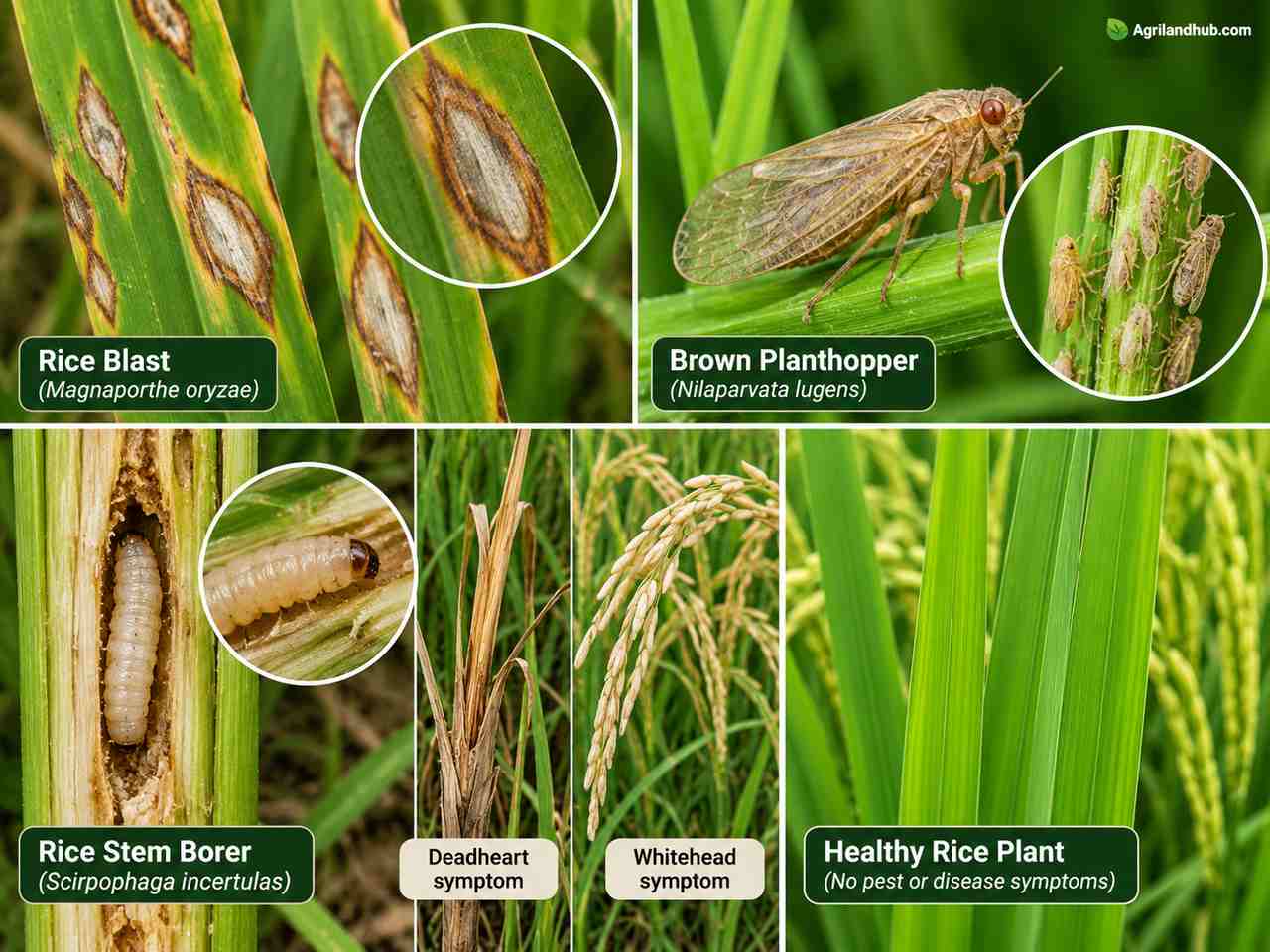
Common Rice Pests
Important rice pests include:
- Rice stem borers: Larvae damage stems and can cause dead central shoots or unfilled panicles.
- Brown planthoppers: These insects feed on plant sap and may cause patches of drying or plant death under severe infestations.
- Rice leaf folders: Larvae fold leaves and feed on leaf tissue.
- Rice bugs: These insects feed on developing grains and can reduce grain quality.
- Rodents and birds: These animals may damage rice plants or consume developing grains.
Pest importance varies by location, so monitoring should focus on species known to occur in the region.
Common Rice Diseases
Diseases affecting rice include:
- Rice blast: Can cause lesions on leaves and damage nodes or panicles.
- Bacterial leaf blight: Produces leaf damage that may progress from the margins or tips.
- Sheath blight: Causes lesions on leaf sheaths and may spread under favorable conditions.
- False smut: Affects developing grains and produces characteristic fungal structures on panicles.
Disease risk depends on the pathogen, variety susceptibility, weather, nutrient management, and crop density.
Integrated Pest Management Practices
Farmers can reduce pest and disease losses by using resistant varieties, maintaining balanced fertilization, monitoring fields regularly, removing volunteer rice and relevant weed hosts, and managing water appropriately.
Avoid unnecessary broad-spectrum pesticide applications because they may harm beneficial organisms and encourage pest resurgence.
When chemical control is justified, use locally registered products according to label directions and recommendations from qualified agricultural advisers.
10. Monitoring Growth and Supporting Panicle Development
As rice plants mature, farmers should monitor crop development and adjust management practices to support productive panicles and grain formation.
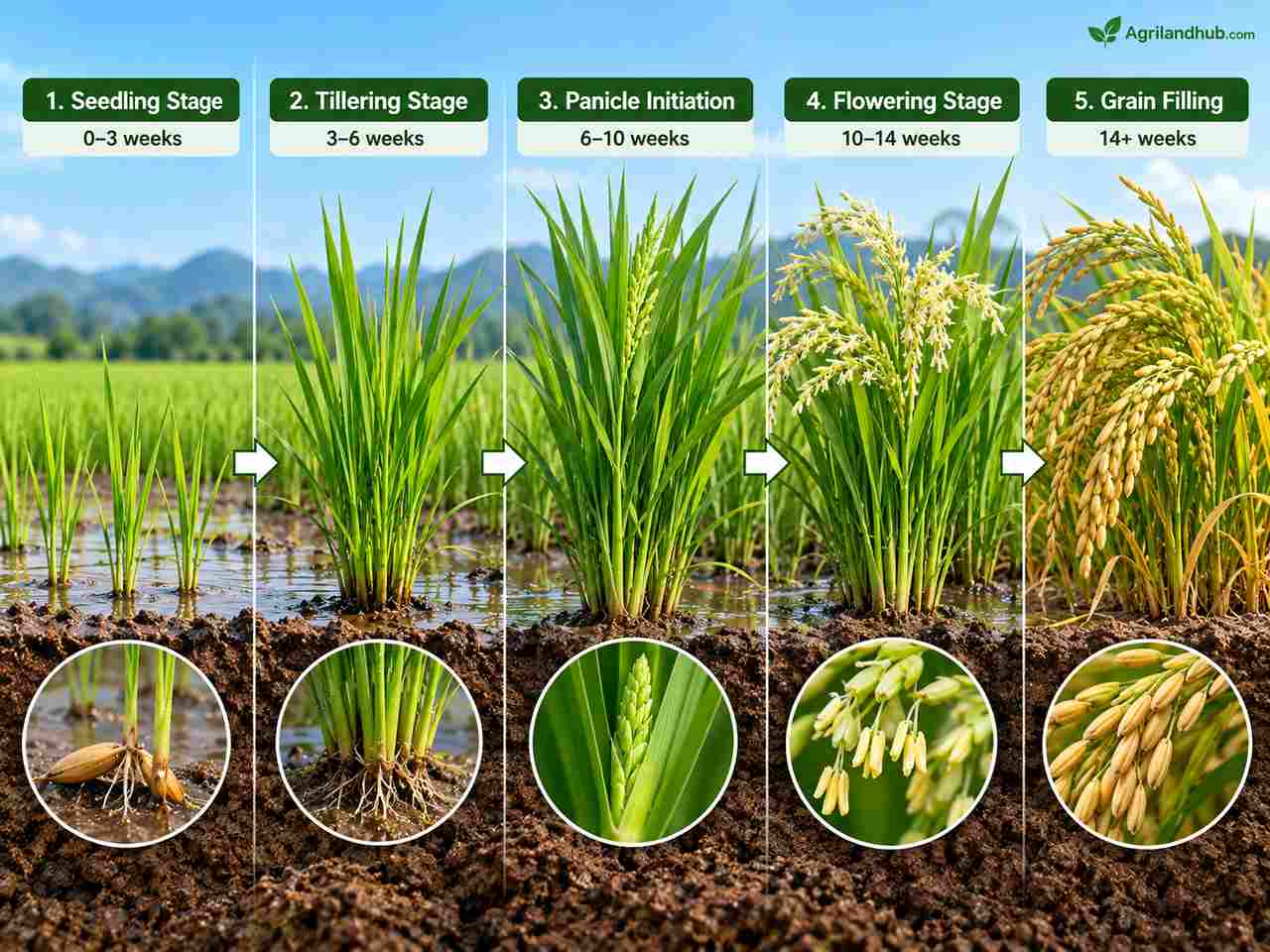
Vegetative Growth and Tillering
During vegetative growth, inspect plant density, leaf color, tiller formation, and root establishment. Uneven growth may indicate nutrient deficiencies, water problems, pest damage, or poor field preparation.
Correct the underlying problem rather than applying fertilizer or pesticides without identifying the cause.
Panicle Initiation and Flowering
Panicle initiation marks the beginning of reproductive development. During this period, rice plants begin developing the structures that will eventually carry grains.
Maintain adequate water and nutrient availability, and avoid unnecessary field operations that could damage plants.
Flowering is particularly sensitive to some environmental stresses, including extreme temperatures and water shortages. Monitor fields closely during this stage.
Grain Filling
After successful flowering and pollination, grains develop and accumulate starch. The developing grains gradually become fuller and heavier.
Maintain appropriate water management, avoid excessive late nitrogen application, and continue checking for pests and diseases that may damage panicles or grains.
11. Determining the Right Time to Harvest Rice
Harvest timing strongly influences grain yield, quality, and post-harvest losses. Harvesting too early can produce immature grains with high moisture content, while harvesting too late can increase shattering, lodging, weather damage, and grain deterioration.
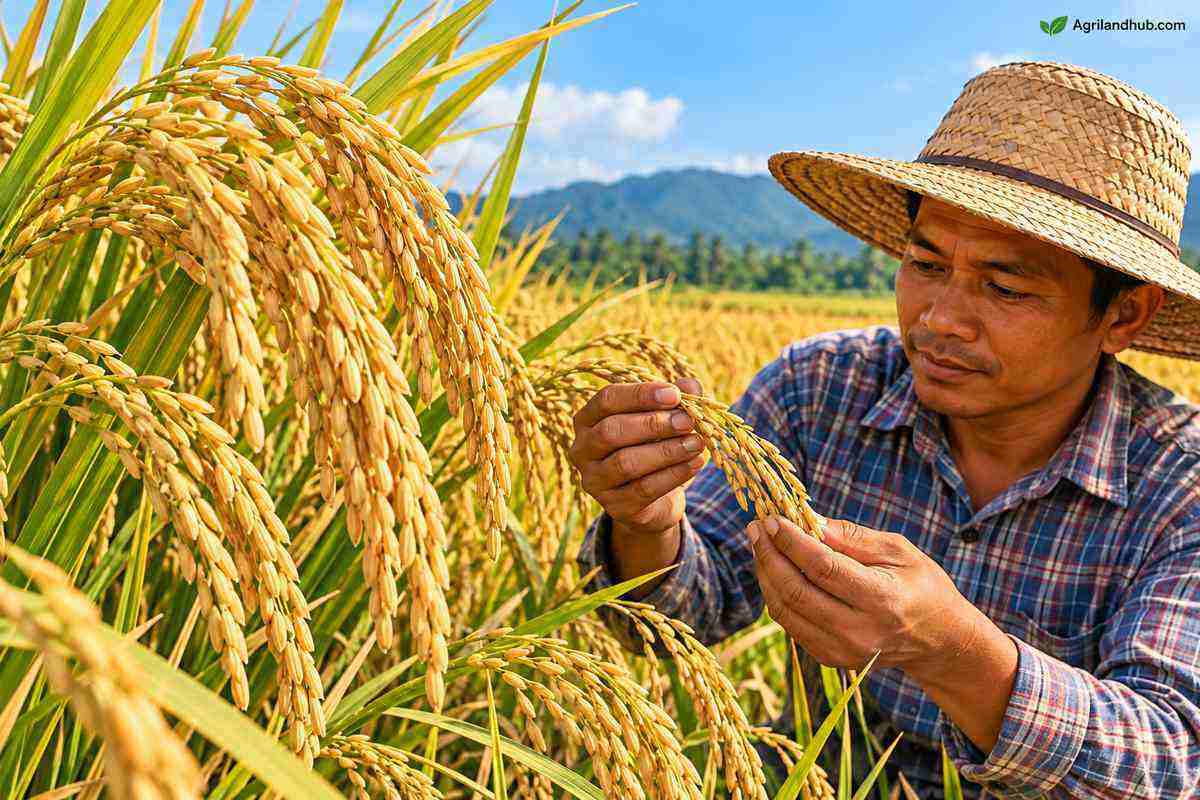
Signs of Rice Maturity
Rice is generally ready for harvest when most grains on the panicles have reached physiological or harvest maturity.
Common signs include:
- Most grains have changed from green to yellow or golden.
- Panicles begin to bend under the weight of mature grains.
- Grains feel firm rather than soft and milky.
- The lower portions of the plant may become yellow or dry.
- Most grains have developed their expected shape and size.
For many rice varieties, harvest commonly occurs around 80–90% mature or straw-colored grains, but the recommended threshold varies with the variety, weather, and harvesting system.
Field observation is more reliable than using a fixed number of days for every crop.
Harvesting Methods
Rice can be harvested manually using sickles or mechanically using reapers and combine harvesters.
Manual harvesting: Farmers cut mature plants, gather them into bundles, and prepare them for threshing. This method is useful for small or irregular fields but requires considerable labor.
Mechanical harvesting: Reapers and combine harvesters can improve harvesting efficiency and reduce labor requirements. Machinery should be adjusted to field conditions, crop height, and grain moisture to minimize cutting and threshing losses.
Harvest when field conditions allow safe access and the grain moisture level is appropriate for the harvesting method.
12. Threshing, Drying, and Storing Harvested Rice
Harvesting is not the final step in rice production. Proper post-harvest handling is essential to preserve grain quality, reduce losses, and maintain market value.
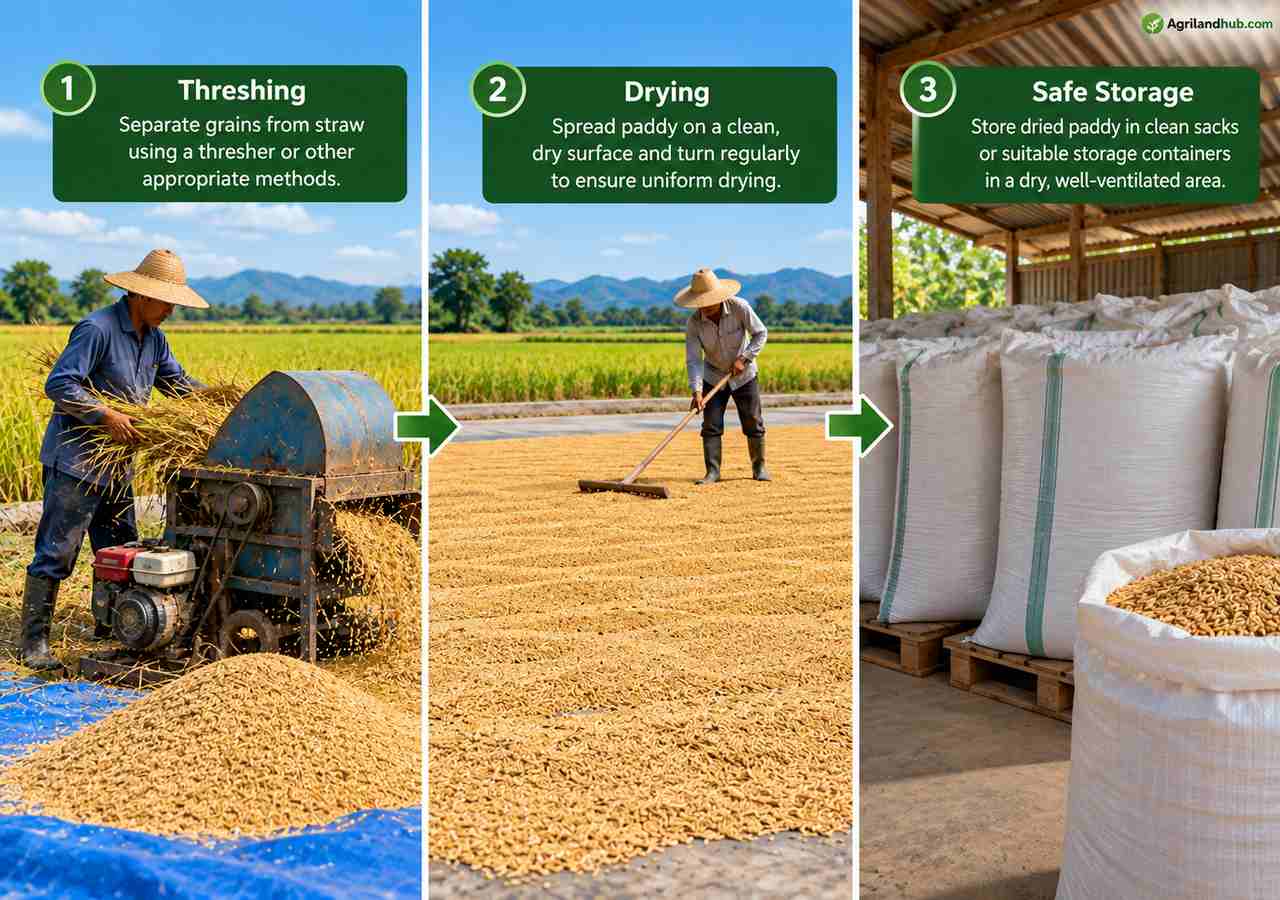
Threshing
Threshing separates rice grains from harvested panicles. It can be performed manually or with a mechanical thresher.
Thresh the crop promptly under suitable conditions to reduce losses from rain, prolonged exposure, and grain deterioration.
Adjust threshing equipment correctly to avoid excessive broken grains or unthreshed panicles.
Cleaning the Grain
After threshing, remove straw fragments, chaff, weed seeds, soil, and other foreign materials. Cleaning improves the quality of the harvested paddy and supports more efficient drying and storage.
Drying Rice
Freshly harvested paddy usually contains too much moisture for safe long-term storage.
Dry the grain promptly to a moisture content appropriate for its intended use. For many storage situations, approximately 13–14% moisture content on a wet basis is a useful target, although the precise requirement depends on storage duration, temperature, and local standards.
Drying can be performed using clean drying floors, tarpaulins, or mechanical dryers.
When sun-drying, spread the grain in a suitable layer, turn it regularly, protect it from rain, and avoid contamination from animals or dirty surfaces. Excessive drying temperatures can damage grain quality and reduce milling performance.
Safe Storage
Store dried paddy in clean, dry, well-ventilated facilities protected from rain, pests, and rodents.
Use moisture-proof storage solutions where appropriate, and monitor the grain for signs of condensation, insects, mold, or unusual odors.
Avoid mixing freshly harvested wet grain with dry grain because this can create localized moisture problems.
13. Common Mistakes to Avoid in Rice Cultivation
Even when farmers follow standard cultivation practices, several common mistakes can reduce productivity and increase production costs.
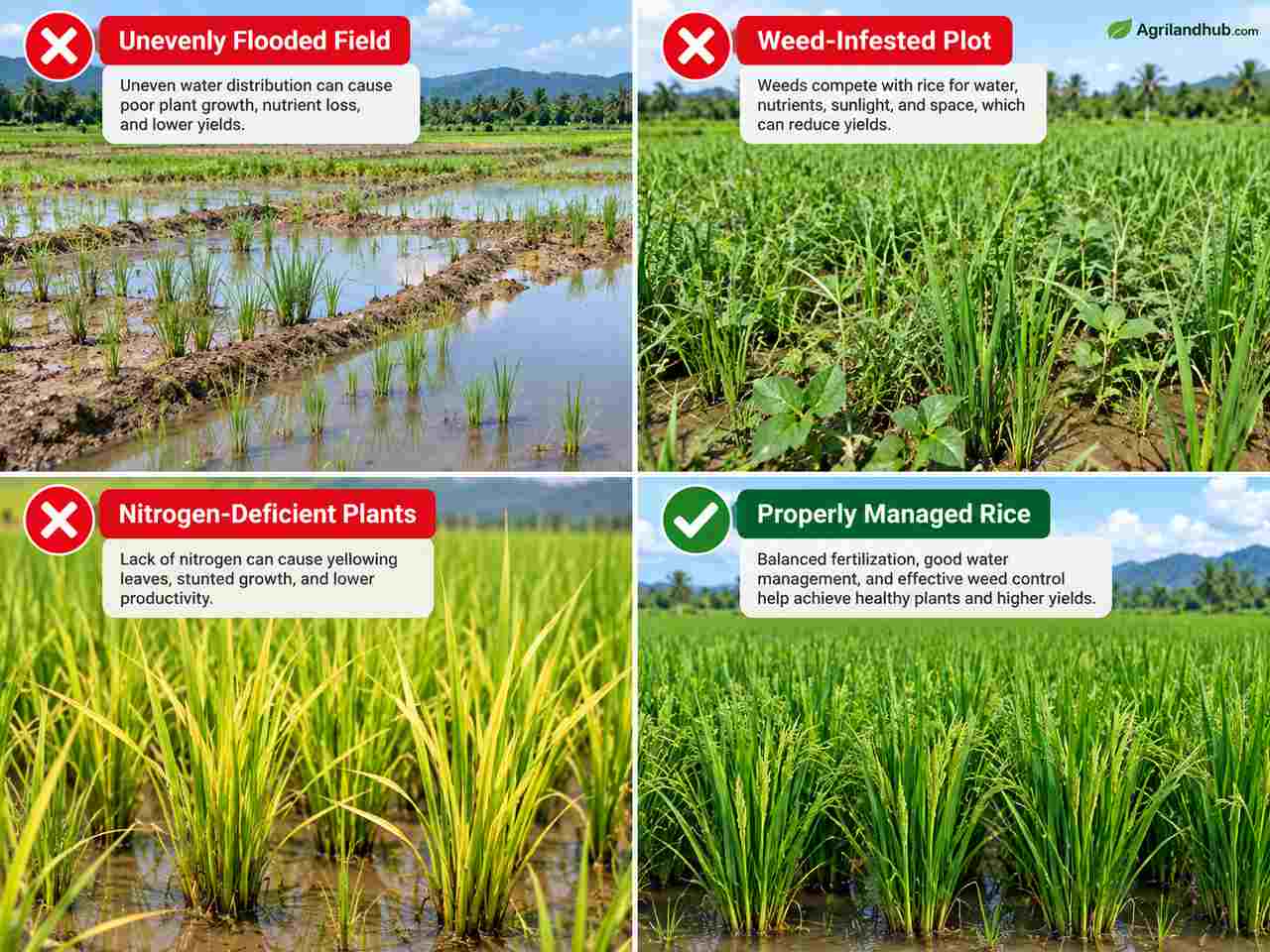
Poor Land Leveling
Uneven fields create inconsistent water distribution and crop growth. Proper leveling helps maintain more uniform conditions across the field.
Using Low-Quality Seeds
Seeds with poor germination, mixed varieties, or seed-borne problems may produce uneven stands. Select quality seeds and test germination before planting.
Excessive Fertilizer Application
Applying more fertilizer than the crop requires wastes money and may increase lodging, pest pressure, and environmental pollution. Base nutrient decisions on soil conditions and crop needs.
Incorrect Water Management
Both prolonged water stress and inappropriate flooding can damage rice plants. Irrigation should reflect crop stage, soil properties, rainfall, and the cultivation system.
Delayed Weed Control
Weeds compete with rice plants most strongly when crops are young and poorly established. Early monitoring and timely intervention are essential.
Harvesting Too Early or Too Late
Harvesting immature grains can reduce grain quality, while delays may increase shattering and weather-related losses. Check maturity regularly and plan labor or machinery in advance.
14. Practical Tips for Improving Rice Yield and Profitability
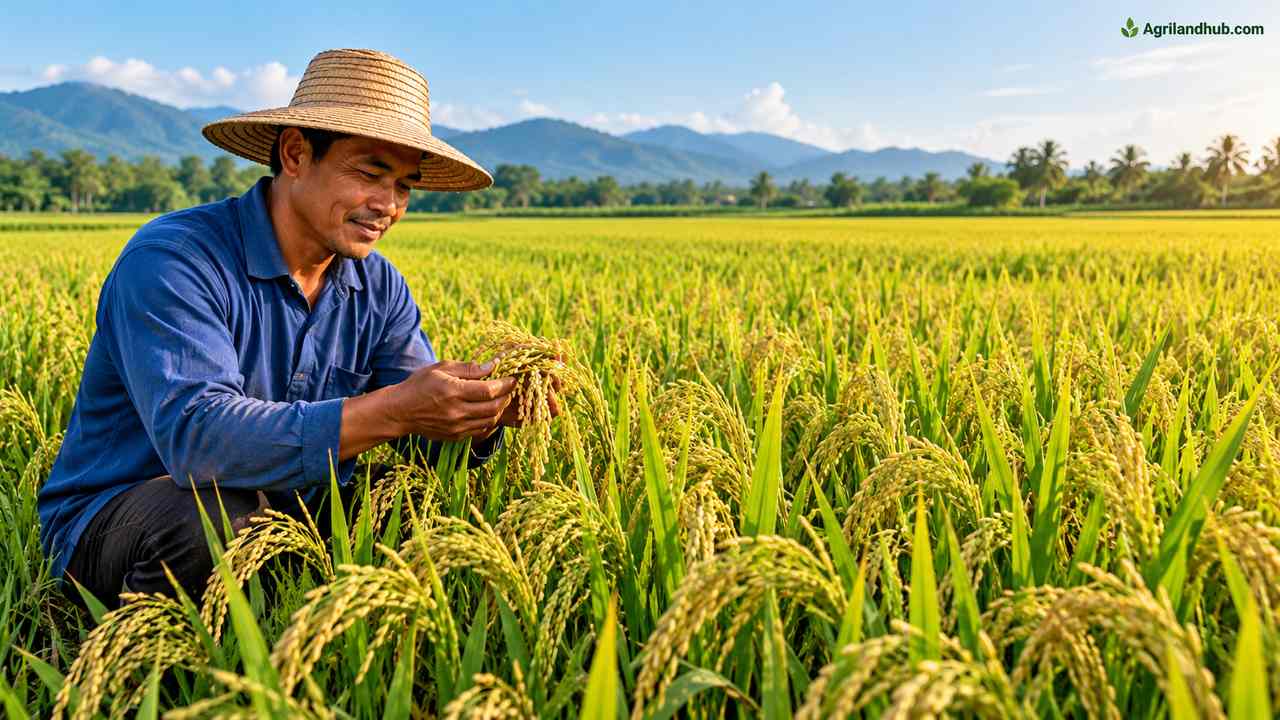
Increasing rice productivity does not necessarily require increasing every input. Farmers can often improve profitability by making better decisions throughout the production cycle.
- Choose locally adapted varieties. Select varieties suited to the planting season, soil, water supply, and market requirements.
- Prepare the field properly. Improve leveling, drainage, and irrigation infrastructure before planting.
- Establish a uniform crop. Use quality seeds and appropriate planting density to reduce gaps and excessive competition.
- Use balanced fertilization. Combine soil testing, nutrient recommendations, and appropriate application timing.
- Monitor the crop regularly. Inspect for nutrient deficiencies, weeds, pests, diseases, and water stress before problems become severe.
- Manage irrigation efficiently. Use rainfall information, field observations, and suitable water-saving practices to reduce unnecessary water use.
- Keep production records. Record seed rates, fertilizer applications, labor expenses, irrigation, pesticide use, harvest weights, and selling prices.
- Reduce post-harvest losses. Plan harvesting, threshing, drying, and storage before the crop reaches maturity.
- Evaluate profitability, not yield alone. Compare revenue with seed, fertilizer, machinery, labor, irrigation, and post-harvest costs to understand the actual return from each season.
- Learn from every planting season. Compare results across fields and seasons to identify which practices consistently improve productivity and reduce costs.
Conclusion
Cultivating rice successfully requires a coordinated approach that begins with proper land preparation and continues through seed selection, planting, irrigation, fertilization, weed control, pest and disease management, harvesting, and post-harvest handling.
Each stage contributes to crop health, grain quality, and overall farm profitability. Farmers can improve their results by selecting locally adapted varieties, maintaining uniform crop establishment, applying nutrients according to actual needs, managing water efficiently, and harvesting at the appropriate maturity stage.
By combining sound agricultural practices with regular field monitoring and accurate production records, rice farmers can reduce avoidable losses, use resources more efficiently, and achieve more sustainable rice production over the long term.
Sources and References
- International Rice Research Institute (IRRI). Basics of Rice Production. IRRI Education, 2022.
- International Rice Research Institute (IRRI). Rice Knowledge Bank: Rice Production and Crop Management. Los Baños, Philippines.
- Food and Agriculture Organization of the United Nations (FAO). Save and Grow in Practice: Maize, Rice, Wheat. Rome: FAO.
- International Rice Research Institute (IRRI). Rice Production Manual. IRRI, Philippines.
- International Rice Research Institute (IRRI). Water Management in Irrigated Rice. Los Baños, Philippines, 2007.
- International Rice Research Institute (IRRI). Seed Quality Management. Rice Knowledge Bank.
- International Rice Research Institute (IRRI). Plant Establishment and Crop Management in Rice. Rice Production Manual.
- International Rice Research Institute (IRRI). Land Leveling for Improved Rice Production. Rice Knowledge Bank.
- Bouman, B. A. M., Lampayan, R. M., and Tuong, T. P. Water Management in Irrigated Rice: Coping with Water Scarcity. International Rice Research Institute, 2007.
- University of California Agriculture and Natural Resources (UC ANR). Integrated Pest Management for Rice. University of California.
- University of California, Davis. Rice Production Manual. Agronomy Department, 2023.
- Bangladesh Rice Research Institute (BRRI), CIMMYT, and Virginia Tech. Destructive Insect Pests and Diseases of Rice and Their Integrated Management. 2024.
- Department of Crop Production and International Rice Research Institute (IRRI). Technical Guideline: Rice Cultivation Reduces Costs, Improves Efficiency, Adapts to Climate Change in the Red River Delta. Hanoi, Vietnam, 2023.
- International Rice Research Institute (IRRI). Rice Production Skills. IRRI Education, 2022.
- Cereal Systems Initiative for South Asia (CSISA). CSISA Knowledge Bank: Resource-Conserving Rice Production Practices. International Rice Research Institute and partner institutions.